- Earn the title Dr.
- See the Grand Canyon
- Visit Niagra Falls
- Skydive
- Go to a foreign country
- See a castle
- Name a star
- Tour Alcatraz
- Make a homemade meal for my family
- Have a cat
- Scuba dive in Mexico
- Go to Mexico
- Go to Coachella
- Walk the Great Wall of China
- Change someone's life
- Teach a seminar
- Zipline
- See the pyramids in Egypt
- Gondola ride in Venice
- Buy my own car
- Get a tatoo
- Ride an ATV
Sunday, April 19, 2015
Blog 13- Bucket List

Monday, March 23, 2015
Blog 12
Five Things I've been procrastinating on...
1. Mailing final information into SFSU
2. School scholarships
3. Going to the gym
4. Looking at housing and financial aid for next year
5. Getting in touch with a physical therapist
1. Mailing final information into SFSU
2. School scholarships
3. Going to the gym
4. Looking at housing and financial aid for next year
5. Getting in touch with a physical therapist
Sunday, March 8, 2015
Blog #10

Friday, February 13, 2015
Blog #9
Now a second semester senior, both my time in San Ramon Valley High and my internship are halfway over. Reflecting on my first blog, I have come so far in my knowledge and experience with behavior analysis. By the end of this semester, I want to have established a solid relationship with at least one client. Creating visual cue cards and scoring adaptive behavior scales has become easy and familiar to me, a goal I wanted to have mastered by the start of this semester. With an excess of new at home clients and programs in the company, I will have many more opportunities to get hands-on experience in the field!
At home programs can be far away or close by, either in the morning or during the day, making going to an at home program difficult to find time for. With my mentor's insanely busy schedule and my work and school schedule, finding a time where we both can go to an assessment has proven difficult. Luckily, I've gotten used to my mentor's busy schedule, now planning in advance when we can both attend at-home programs. Hopefully, this proves to be useful and I can get more time in the field. Also, after hiring a new office manager, I can easily text her and see if my help is needed in the office, expecting a quick response when my mentor is busy. Combining busy schedules proves to be the most difficult task in my iQuest, and planning meetings ahead of time is an easy fix. As my knowledge of behavior analysis and the practice has grown, my comfortableness around children has too. Prepared and experienced with the correct procedures to use, and when to use them, has eased my anxiety and boosted my confidence working with kids. Practice is the only way to truly excel and gain experience, so I can only hope having the chance to attend assessments and at-home programs continues to increase my knowledge and reach my goals!
Thursday, January 22, 2015
End of First Semester! (Blog #8)
At the start of the year, I knew I would love iQuest, but I never knew how much. Working with my mentor, Jeanine, has broadened my knowledge about behavior analysis incredibly over the last four months. I've interned around 28 hours with Jeanine's business, Building Connections Behavioral Health Inc. Most of the work I've done has been split between office work and field work. I first learned how to score the Vineland, a book used to assess and scale behaviors. I have gone to Bollinger Canyon Elementary School twice, where I helped special education teachers with activites in the classroom and at recess. Children have always been slighty foreign to me, and entering a classroom without prior experience with kids, let alone austic children, was intimidating. Every teacher was very accepting, and never hesitated to help when I was noticably uncomfortable. Being in such an accepting environment made it easy for me to catch on quickly! During one session I was told to watch a girl named Kala, and before we went out for recess one teacher told me, "Make sure you watch her closely! She likes to sprint towards to parking lot,". Situations like this definitely made me nervous, but were simply routine for the other special education teachers.
In the office, I have sat in on meetings about proper restaint techniques when dealing with violent children, and was volunteered to have the restraints be practiced on me! I have also created numerous goal sheets and visual commands teachers use in the classroom. Sitting in on meetings between Jeanine and special education teachers has taught me the effort and patience needed to control the small, yet unpredictable classrooms. Visual cues and commands are often used in these classrooms, as many autistic children have difficulty effectively communicating. I love hearing teachers personally thank me for making token boards or visuals, saying how often they use them and how much the children enjoy them! Laminating and cutting small pieces of paper for hours, only for them to soon be chewed on, bent, and eventually destroyed, pays off when I see them being used in a classroom.
I also attended a workshop on play therapy with Mary Ruth Cross. This workshop was something new and exciting, as I was unaware of play therapy's existence until Mrs. Sekara introduced me to Mary Ruth. Sadly, I could only attend half the workshop. Once again, the workshop was full of very knowledgable and accepting people! One thing I love about the world of psychology is anyone in the field of therapy is understanding, welcoming, and open. I have yet to meet one therapist or psychologist that did not leave me a little slice of their knowledge. The concepts and techniques behind play therapy I found intriguing, and a month later Mary Ruth gave me a tour of her office. The organization and layout of an office is especially important when dealing with play therapy, as you need sufficient space for a play room. Basically, the therapist or mother plays with a child during a session, and that is it! The child directs the play in most cases, and the therapist reflects later on the patient's behaviors and actions. Connecting with our left brain breaks away from our right brain's linear pattern, making us less critical of ourselves and more playful. While at Mary Ruth's office, she asked to have a session with me, so of course I agreed. There was a sandbox in front of me, a room stocked with toys on every shelf, and when she told me to just play, I was stumped. I had a lot of questions and took a very long time to grab any toys off the shelf. Mary Ruth mentioned how children are always quick to grab whatever they want, corresponding to how more left-brained they are. The more right brained we home, the more critical we are of ourselves and our decisions, not letting our minds simply wander and be free. Although I haven't met again with Mary Ruth, the concepts she taught me stuck with me!
As of lately, Building Connections Behavioral Heallth Inc. just picked up a new contract, which took 3 painstaking hours to edit by the way, and are getting referrals daily! I have gotten tons of practice scoring the Vineland due to all these new clients. Recently, many new clients have been around the Danville area, giving me the opportunity to go to home programs! The first home program I went to was in December with a girl named Cassidy. Primarily, I sat in on a meeting with Cassidy's mother and Jeanine, and made sure she was okay with me observing or being apart of Cassidy's sessions. The next week I met Cassidy. While Jeanine met with her mom, another behavior analyst and I played with Cassidy and helped with her homework. Simply playing with her was a little uncomfortable, because I've never been sure how to act around kids. Having another behavior analyst there boosted my confidence, and watching how she interacted with Cassidy started to ease my nervousness, as I learned from her. It is difficult to draw the line between treating this child as a child, and treating her as a child with certain problem behaviors that we are trying to modify. Although working with kids is outside of my comfort zone, I'm developing and gaining knowledge in a whole new field I would have otherwise avoided. With an abundance of new patients in the area, my experience working with children is only growing faster. The next semester should be full of unpredictable and novel opportunities, and I am incredibly excited to gain more practice in the field!
Sunday, November 23, 2014
Blog #6
 |
| Sample Vineland scoring |
Both of my mentors have worked with children primarily, which was never something I was interested in. I have never been good with kids, and I usually feel uncomfortable around them. With a very broad range of behavioral and mood disorders the children I work with have a much harder time expressing themselves and communicating, presenting me with an even bigger challenge of how to connect with them. Going into kindergarten classrooms and assisting the teachers with their activities has helped me learn how to react in such an unpredictable environment, familiarizing me with the world of autism.
 |
| Example of Token Economy Board! |
Monday, November 3, 2014
Blog #5
In researching famous, influential clinical and counseling psychologists on the web, Paul Elkman stood out among the others. Extremely certified, knowledgeable, and accurate, he is a cofounder of micro-expressions and studying them. Elkman also was professor at UCSF for many years, a local college. His focus is non-verbal behavior, something I've always been intrigued in. Being such a successful and prominent figure in psychology, Paul Elkman quickly captured my interest.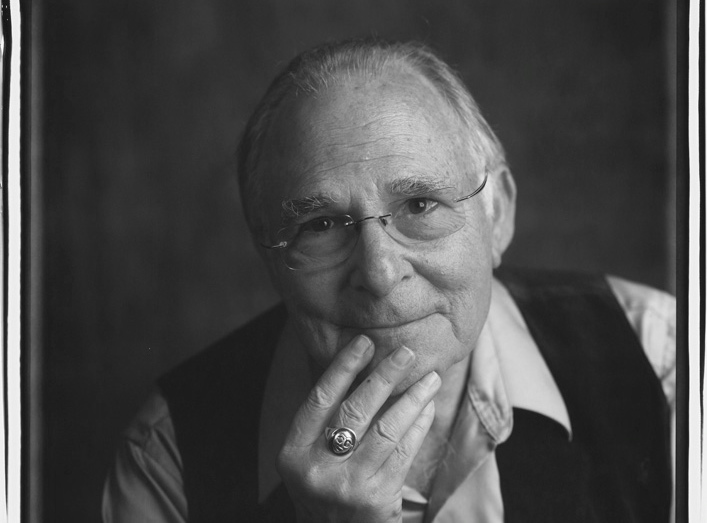 Elkman obtained a Ph D in clinical psychology after a one-year internship at UCSF. In 1965, Elkman began researching nonverbal behavior, including hand movements, gestures, and facial expressions. In collaboration with W. Freisen, him and Elkman created the Facial Action Coding System (FACS) in 1978, otherwise known as the only tool that comprehensively measures facial expressions. He started studying depression patients and their facial expressions while lying, revealing micro facial expressions. He turned his findings over to the public after he retired, writing many books and articles. Elkman's childhood is harder to find, but he originally planned on being a psychotherapist yet changed his mind when his mother got a severe mental illness when he was sixteen.
Elkman obtained a Ph D in clinical psychology after a one-year internship at UCSF. In 1965, Elkman began researching nonverbal behavior, including hand movements, gestures, and facial expressions. In collaboration with W. Freisen, him and Elkman created the Facial Action Coding System (FACS) in 1978, otherwise known as the only tool that comprehensively measures facial expressions. He started studying depression patients and their facial expressions while lying, revealing micro facial expressions. He turned his findings over to the public after he retired, writing many books and articles. Elkman's childhood is harder to find, but he originally planned on being a psychotherapist yet changed his mind when his mother got a severe mental illness when he was sixteen.
Subscribe to:
Posts (Atom)